
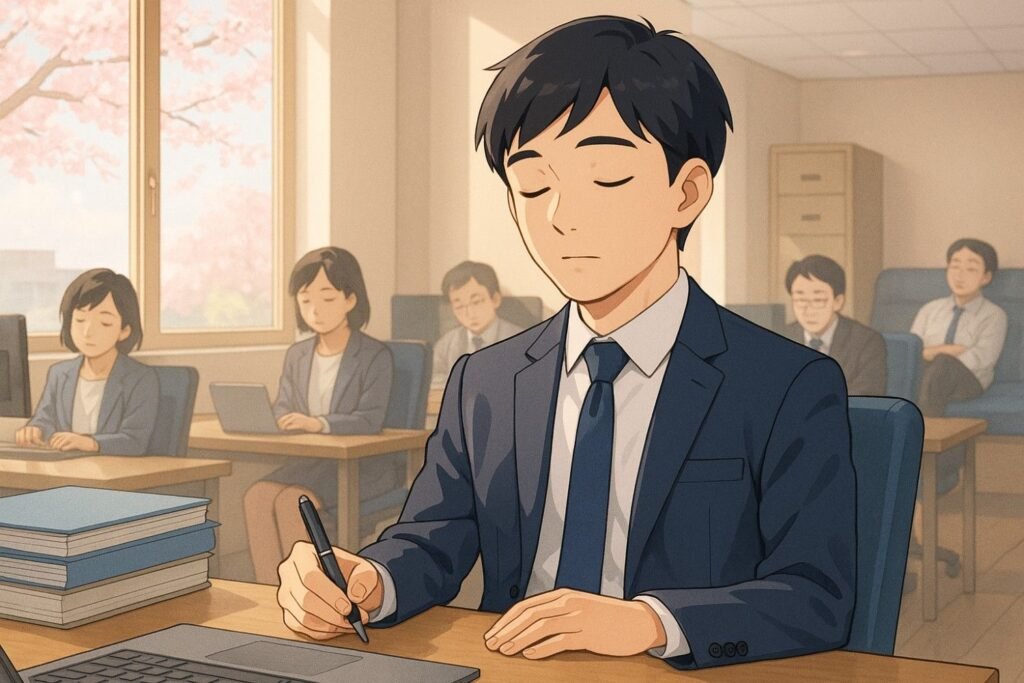
Ever seen someone dozing off at work and thought, “Wow, they must be so dedicated”?
In Japan, that’s not sarcasm, it’s an actual cultural truth.
Picture this: You’re on a crowded Tokyo subway at precisely 8:07 a.m. The train rocks gently, commuters sway in rhythm, and heads begin to bob. Briefcases still in hand, eyes closed, expressions calm. Nobody nudges them awake. Nobody sighs in judgment. Because here, this is not laziness—it’s Inemuri.
The Japanese word Inemuri translates to “sleeping while being present”—a social ritual that’s as much about showing commitment as it is about catching a few Z’s.
In this article we’ll explore:
- The cultural roots behind inemuri
- Why a cat-nap at your desk can signal dedication, not laziness
- Health and productivity angles that back the practice up
- Etiquette rules every newcomer should know
- What the rest of the world can learn (and what it probably shouldn’t copy-paste)
Grab a cup of tea, just don’t be surprised if you feel a little sleepy by the end.
1. Inemuri 101: More Than Just a Workplace Snooze
A Working Definition
Inemuri refers to short, spontaneous naps taken in public or professional spaces without fully “checking out.” The sleeper remains socially available—they can wake if addressed, keep an upright posture, and usually continue clutching that pen or phone.
“You’re not abandoning your post; you’re proving you were there long enough to need a rest.”
Where You’ll Spot It
- At office desks between tasks
- During all-hands meetings (yes, really)
- On commuter trains and buses
- In university lecture halls
Unlike a scheduled siesta, inemuri is casual, brief, and often unplanned—think of it as dozing without the do-not-disturb sign.
🎥 Watch: The Cultural Significance of Inemuri in Japan
2. Historical & Social Roots
Confucian Echoes
Japanese work culture is heavily influenced by Confucian values—diligence, perseverance, and group harmony. Drifting off in public historically hinted that you had been “burning the midnight oil” for the sake of the group.
Post-War Economic Boom
In the 1960s–80s, Japan’s salarymen worked marathon hours to rebuild the economy. A quick nap on the train became a visual shorthand for commitment. By the time pagers turned into flip phones, inemuri was already baked into daily life.
Face-Saving Mechanism
Pulling an all-nighter yet still showing up to morning roll call? Inemuri lets you remain physically present, salvaging your face while catching micro-rest.
3. Benefits Backed by Science (and Common Sense)
3.1 Cognitive & Health Upsides
- Memory consolidation: A 10–20 minute nap can improve recall and alertness by up to 30 % (National Sleep Foundation, 2022).
- Stress reduction: Short naps lower cortisol levels, contributing to cardiovascular health.
- Accident prevention: Tokyo Metro reports fewer platform accidents among frequent nappers than among visibly exhausted non-nappers (internal safety memo, 2019).
3.2 Productivity Payoff
Companies like Nintendo and Okamura Corporation allow—or quietly ignore—inemuri. Managers note fewer errors during late-day tasks when employees take brief, unscheduled rests.
Quick Nap = Fewer Mistakes. One manager told me, “I’d rather see someone nod off for five minutes than spend the afternoon redoing a spreadsheet.”
3.3 Social Cohesion
Because everyone recognizes inemuri’s function, coworkers rarely shame each other. The practice reinforces a sense of shared struggle and mutual respect.
4. Etiquette: The Unwritten Rulebook
4.1 Do’s
- Stay Upright: Leaning forward onto the desk is okay; sprawling on the floor is not.
- Remain Low-Key: Keep snoring, drooling, or heavy breathing to zero.
- Hold Your Tools: A pen, notebook, or smartphone signals “I’m still here.”
- Be Interactable: Respond quickly if addressed—missing your name in a meeting is a faux pas.
4.2 Don’ts
- Bring pillows or blankets (too cozy → looks intentional).
- Recline in a managerial meeting unless higher-ups also do so.
- Oversleep past 20-30 minutes; it shifts from inemuri to “shirking.”
5. A Foreigner’s First-Person Glimpse
When I began freelance work in Tokyo, I accidentally committed the classic rookie error: jolting a colleague awake in a café because I thought he’d blacked out. He smiled and said, “No worry—inemuri da yo.” Five minutes later he was back on his laptop, hammering out code while I was still embarrassed. Lesson learned: sometimes the most productive thing you can do is… nothing, briefly.
6. East Meets West: Can Inemuri Travel?
6.1 Adoption Attempts
- Silicon Valley firms install nap pods—structured, scheduled, and sanitized for HR compliance.
- Spanish-style siestas are re-entering discussion in warmer regions as climate change makes afternoons hotter.
6.2 What Might Get Lost in Translation
- Context matters. In a culture where presence equals loyalty, napping reads as hard work. In offices focused purely on output metrics, it could still look like slacking.
- Social signaling: Without shared understanding, a dozing coworker may face unspoken penalties.
7. Practical Tips for Trying Micro-Naps—Wherever You Work
- Negotiate guidelines with your manager; transparency beats surprise.
- Set a silent timer for 15 minutes—long enough to refresh, short enough to avoid grogginess.
- Use soft, indirect light or an eye mask if you can’t stay upright.
- Document outcomes: Track error rates or creative output before and after adopting mini-naps; data can win skeptics.
For deeper advice, see our internal guide, “Power Naps Without Raising Eyebrows.”
8. Critiques & Limitations
- Surface Solution: Inemuri can mask deeper issues like chronic overwork (karōshi, or death by overwork).
- Gender Gap: Women, especially in customer-facing roles, often feel they cannot nap without judgment.
- Health Risks: Frequent sleep debt patched with naps may still harm long-term wellbeing.
Conclusion
Japan’s inemuri reminds us that productivity and rest are not enemies. By accepting short, visible naps as a mark of commitment, Japanese society reframes fatigue from a weakness into proof of effort. Whether your office is in Osaka or Ohio, a mindful micro-nap could be the cheapest performance booster you ever try provided everyone’s on the same page.
Feeling drowsy yet? Maybe that’s your cue. Close your eyes for ten minutes, then come back ready to tackle the rest of your to-do list.
Sometimes the smartest way to move forward is to pause—without leaving the room.