
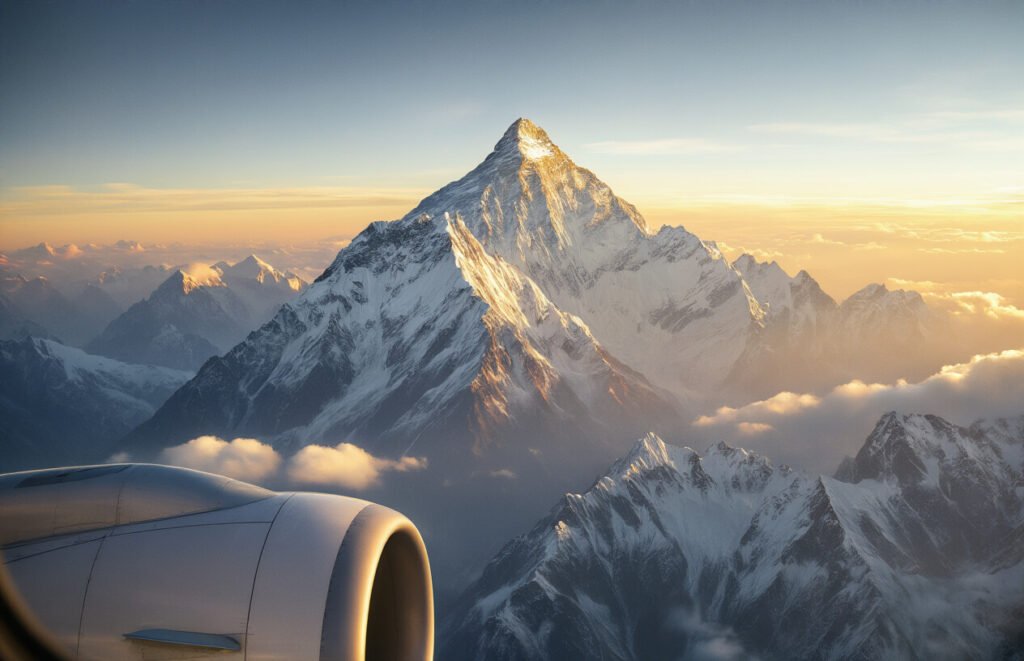
It started with a seat. Seat 16A
The Boeing 737 banked gently to the left, and a collective gasp rolled through the cabin. There, framed by a porthole no larger than a dinner plate stood a jagged white pyramid floating above the clouds. I had read dozens of stories about Mount Everest, but nothing prepared me for that split-second realization that I was staring at the crest of the world.
In this article we will explore how, when, and why a simple window seat can deliver one of the most memorable views on Earth. From choosing the right flight to capturing a postcard-worthy photo, you’ll find practical tips, unexpected trivia, and a few reflections on what it means to see Everest from the sky.
The Sky Route to Everest: How I Did It
1. Commercial “Mountain Flights” vs. Regular Routes
- Dedicated mountain-sightseeing flights
- Operated mainly by Nepali carriers such as Buddha Air and Yeti Airlines
- Depart from Kathmandu’s Tribhuvan International Airport (KTM) early in the morning
- Last 45–60 minutes, looping along the Himalaya range before returning
- Standard Kathmandu–Paro, Kathmandu–Lhasa, or Delhi–Kathmandu legs
- Less expensive than dedicated tours
- Require strategic seat selection and a bit of luck with the weather
“Look for Kathmandu departures between 6:00 a.m. and 8:00 a.m.—the air is calmer, visibility is sharper, and low sun angles sculpt the ridges in gold.” — Captain Nima Sherpa, Yeti Airlines
2. Making Sense of Seat Maps
If the flight path hugs the Himalayan wall, seats on the left side departing Kathmandu (or right side heading toward the city) maximize your odds. Tools like SeatGuru or simply asking the airline check-in desk often do the trick.
Timing Is (Almost) Everything
1. Seasonal Clarity
- Pre-monsoon (late February–May)
- Blue skies, snow still abundant
- Post-monsoon (late September–November)
- Crystal-clear air after summer rains
- Winter (December–January)
- Cold but stable; haze sometimes creeps into valleys
2. Time of Day
- Early departures = lower thermal turbulence
- Late afternoon flights risk cloud build-up along the crest
What You’ll Actually See
1. Spotting the Peak
Contrary to paperback illustrations, Everest doesn’t tower alone. It is nestled among Lhotse, Nuptse, and countless unnamed spires. Look for:
- A distant triangular summit that appears slightly set back
- A plume-like wisp: the famous “Everest banner cloud,” caused by high-velocity jet-stream winds
2. Altitude Illusions
At 35,000 ft (≈10,700 m) your aircraft is still above Everest’s 29,032 ft (8,848 m) summit, yet perspective makes the peak seem level with you. This optical quirk often ignites cabin-wide chatter: “Are we higher than Everest?”
3. Human Footprints on a Remote Canvas
While villages like Namche Bazaar are hidden in valleys, terraced fields sometimes glimmer in sunlight—a reminder that life persists even in thin air.
Capturing the Moment: Photography Tips
1. Gear and Settings
- Smartphone cameras in RAW mode (if available) allow later editing
- Manual exposure: underexpose by 0.3–0.7 EV to avoid blown-out snow
- Use a polarizing filter attachment to cut window glare
2. Window Hacks
- Clean the outer surface of your window with a tissue before takeoff (flight attendants usually have no objection)
- Place the lens as close as possible to the pane to minimize reflections
- Shield stray cabin light with a jacket or menu card
Pro-tip: Set your phone to airplane mode but keep location services on. Many devices still log GPS altitude, adding a geeky data layer to your image.
3. Storytelling Over Perfection
A slightly blurred shot with a genuine reaction in the frame often resonates more than a technically flawless landscape. Include your travel partner’s silhouette or the winglet to provide scale.
Respecting the Mountain—From Afar
1. Environmental Reflection
Seeing Everest without treading on its fragile glaciers is arguably the lowest-impact way to appreciate it. According to a study in the journal Arctic, Antarctic, and Alpine Research, popular ascent routes carry more than 30,000 kg of trash every climbing season. Your seat-belt-secured vantage point leaves no footprint.
2. Cultural Mindfulness
- Support Nepali businesses: buy a local coffee in Kathmandu airport’s domestic terminal café
- Consider donating to organizations like the Khumbu Climbing Center, which trains local guides
Frequently Asked Questions
Is a mountain flight worth the extra cost?
If cloud cover cancels the trip, reputable airlines offer either a partial refund or a reschedule. Given the average price of US $200, many travelers deem the guaranteed left-hand view and cockpit visit (common practice) well worth it.
How long will I see Everest during a regular commercial flight?
Roughly 10–15 minutes, depending on routing and atmospheric clarity.
Do I need binoculars?
Not necessary, but compact 8×25 binoculars reveal dramatic cornices and serac lines otherwise invisible to the naked eye.
Final Takeaway: One Seat, One Sunrise, One Everest
Whether you book a purpose-built mountain flight or simply choose the clever side of a regular route, glimpsing Mount Everest from the sky compresses days of trekking into a few reverent minutes. It is humbling to realize that, even at jetliner altitude, one mountain can still feel unreachable. The next time you fly over Nepal, claim that window seat, silence the in-flight movie, and let Earth’s highest horizon steal the show.
Final Takeaway: A view of Everest from 35,000 ft requires only three ingredients seat planning, early-morning timing, and a moment of stillness to appreciate just how small we are in the shadow of giants.