Introduction: Why India-Pakistan Peace Matters More Than Ever
In a world where conflict often grabs the headlines, the story of India and Pakistan remains one of the most enduring and complex rivalries. As neighboring countries with shared historical and cultural roots, their journey from a single nation to two sovereign states has been fraught with tension and strife. The question now is: why must these two nations choose peace over conflict? This article delves into this intricate narrative, aiming to shed light on why peace is not just a preferable but essential path for both nations’ future.
Historical Context: From Partition to Present Tensions
The partition of British India in 1947 created two separate entities India and Pakistan each with its own distinct identity. From this point onward, their relationship was marred by territorial disputes, most notably over Kashmir, and has led to several wars.
Events That Shaped Relations
- Partition and Its Ramifications: The partition was a traumatic experience, displacing millions and causing communal violence. The memories of these events have contributed to a lasting mistrust.
- The Kashmir Conflict: A focal point of Indo-Pak tension, Kashmir has witnessed continuous disputes, claiming countless lives and resources from both sides.
The history of conflict between India and Pakistan often overshadows their common heritage, yet embracing this shared past could hold keys to future reconciliation.
💰 The Economic Benefits of Peace Between India and Pakistan
War Is Expensive—Peace Pays Off
Both nations allocate significant portions of their budgets to defense, diverting resources from education, healthcare, and infrastructure.
What Peace Can Bring
- Increased Bilateral Trade: According to a World Bank report, India-Pakistan trade potential stands at over $37 billion annually, but political instability has kept trade below $3 billion.
- Job Creation and Economic Growth: Peace would allow for economic corridors, joint ventures, and tourism, especially in border regions like Punjab and Rajasthan.
- Reduced Military Spending: Funds saved from defense can be channeled into social development, benefiting millions.
🤝 Cultural and Humanitarian Bonds That Transcend Borders
Despite political differences, the people of India and Pakistan share much in terms of language, food, music, and traditions, creating a unique bond.
The Human Element
- Family Connections Across Borders: Many families find themselves divided by the border, with their relationships strained by the lack of diplomatic ties between the two countries.
- Cultural Exchanges: Through art, music, and cinema, citizens of both countries already engage and influence each other, fostering goodwill and understanding.
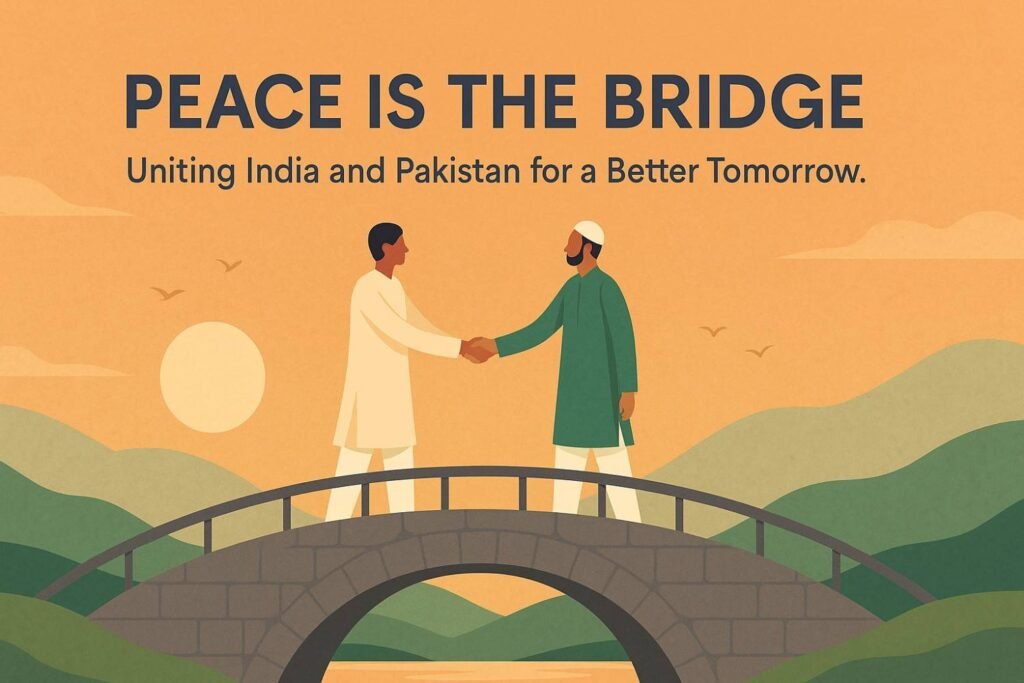
Cultural diplomacy could be the bridge that narrows the chasm between India and Pakistan, making peace a tangible reality.
🌐 Geopolitical Stability: Why the World Needs India-Pakistan Peace
Located strategically on the Asian continent, India and Pakistan play crucial roles in regional security and stability. Mutually beneficial relationships can contribute to broader peace initiatives across the region.
A Catalyst for Regional Peace
- Collaboration Against Common Threats: Issues like terrorism, climate change, and health pandemics require coordinated efforts beyond national boundaries.
- Regional Stability as a Collective Goal: Peace between India and Pakistan could ripple across South Asia, leading to a more stable and prosperous region.
The combined efforts of India and Pakistan in addressing and overcoming regional challenges can set a precedent for global peace efforts.
Conclusion: Peace Is the Only Way Forward
The future of India and Pakistan depends not on their weapons, but on their willingness to embrace a peaceful coexistence. It requires bold leadership, political will, and, most importantly, public support. The people of both nations, yearning for a better tomorrow, have the power to propel their leaders towards conciliation.
In this journey towards peace, India’s and Pakistan’s shared history, economic potential, cultural bonds, and geopolitical significance present not obstacles but opportunities for growth and harmony.
Let us hope that common sense prevails for both countries to realize that peace is not just a choice but a necessity.
“In the tapestry of history, let India’s and Pakistan’s threads intertwine not in conflict, but in a shared vision for peace.”