
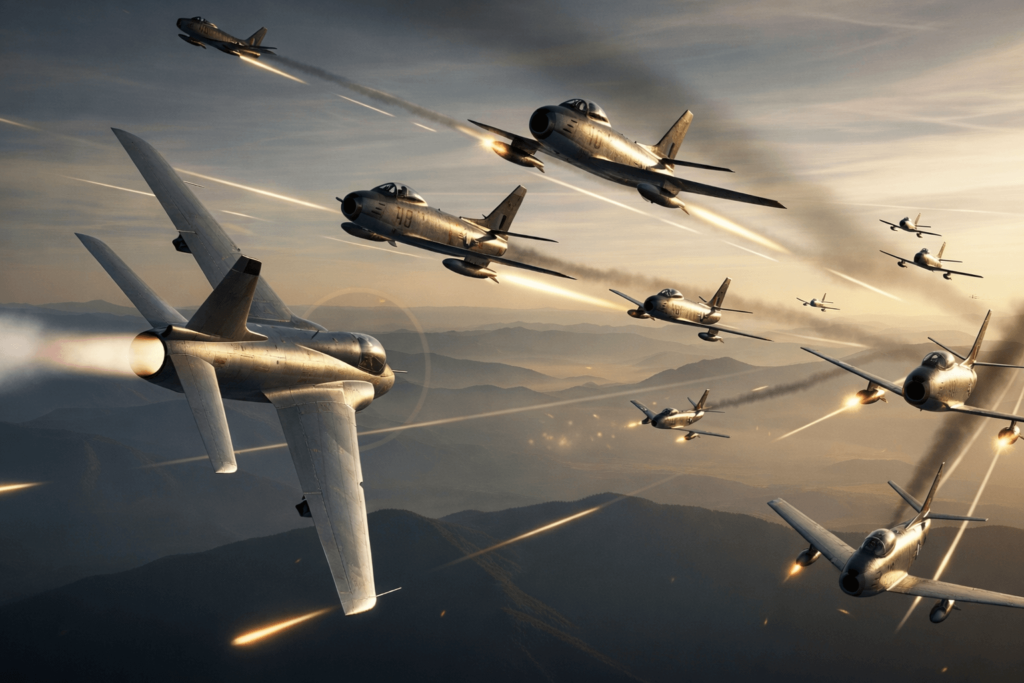
Imagine looking up at the sky and seeing six enemy fighter jets diving toward you like vultures.
Most people would run for cover. Most would pray.
Flying Officer Nirmal Jit Singh Sekhon didn’t run. He didn’t just pray. He climbed into his tiny Gnat fighter jet, revved the engine amidst exploding bombs, and flew straight into the jaws of death.
With the buzz around the upcoming movie Border 2, everyone is asking the same question: Who is the real hero behind the story?
While Sunny Deol and the cast bring the drama to the screen, the reality is far more chilling, far more heroic, and far more emotional than any script could ever be. This is the Nirmal Jit Singh Sekhon real story a tale of a 26-year-old boy who became a legend in the dusty skies of Srinagar.
The Boy Who Wanted to Touch the Sky
Before he was a Param Vir Chakra hero, Nirmal was just a young man from the village of Isewal in Ludhiana, Punjab.
Born into a family of soldiers, patriotism wasn’t just a word to him; it was in his blood. His father was a Flight Lieutenant, and young Nirmal grew up watching planes streak across the Punjab sky, dreaming that one day, he would be the one in the cockpit.
He was known for being tall, lanky, and incredibly sharp. But in 1971, during the Indo-Pak war, he wasn’t just a pilot. He was the last line of defense for the Srinagar Airfield.
And on that foggy December morning, destiny came knocking.
14th December 1971: The Day the Earth Shook
The morning was cold. The mist over Srinagar was thick.
Suddenly, the silence was shattered. No warnings. No time to think.
Six Pakistani F-86 Sabre jets faster and more advanced than the Indian Gnats—began bombing the runway. Their mission was simple: destroy the airfield so no Indian planes could take off.
It was a suicide mission to try and fly. The runway was full of debris. Dust was blinding. The enemy was already overhead, circling like sharks.
But Nirmal Jit Singh Sekhon didn’t care about the odds.
While others might have waited for the raid to end, Sekhon and his colleague, Flight Lt. Ghumman, scrambled to their aircraft. As bombs exploded mere yards away, Sekhon lifted his Gnat into the air.
He was airborne. But he was alone.
One vs. Six: The Dogfight That Defied Logic
What happened next is the stuff of legends—and likely the centerpiece of the Border 2 real hero narrative.
As his wingman lost visual contact in the chaos, Sekhon found himself in a 1-versus-6 dogfight.
Let that sink in. One Indian Gnat against six Pakistani Sabres.
By all laws of physics and warfare, he should have been shot down in seconds. But Sekhon flew like a man possessed. He didn’t flee; he engaged. He banked his small plane sharp and hard, maneuvering behind the enemy jets.
The Pakistani pilots were stunned. Who was this madman?
In the roaring skies, Sekhon managed to hit one Sabre, setting it on fire. Then, he went for another. He was twisting, turning, and firing, keeping the entire enemy formation busy while the airfield below was saved from further destruction.
His voice crackled over the radio, calm but intense:
“I am behind two Sabres. I won’t let them get away…”
The Ultimate Sacrifice
For minutes that felt like hours, he held them off. He was winning the psychological war. But the sheer number of enemy jets eventually caught up to him.
His aircraft was hit. Heavily.
The control tower shouted for him to eject. To save himself. He had done enough. He had saved the base.
But Sekhon tried to save his aircraft. He tried to level out.
Cruelly, the flight system failed. His Gnat crashed into a gorge near the airfield. The smoke rose, and the sky fell silent.
Nirmal Jit Singh Sekhon was gone. But he had taken the enemy’s confidence with him. The Pakistani jets, shaken by the ferocity of this single Indian Air Force war hero, turned back. They didn’t drop another bomb on the runway that day.
Why Border 2 Had to Tell This Story
For decades, this story has been told in hushed tones in Air Force mess halls and history books. But the general public often forgets.
This is why movies like Border 2 are so crucial. They remind us that the freedom we breathe wasn’t free. It was bought by men like Sekhon who, at 26, had a whole life ahead of him a wife he had just married, parents who adored him and gave it all up for the tricolor.
He became the only Indian Air Force officer to date to be awarded the Param Vir Chakra, India’s highest wartime gallantry award.
His citation reads: “Against odds of 1 to 6, he stood out… his heroism was of a most exceptional order.”
A Legacy That Never Dies
When you watch the movie, and you see the jets roar across the screen, don’t just see the special effects.
See the face of Nirmal Jit Singh Sekhon. See the smoke rising over Srinagar. Feel the heartbeat of a young man who knew he wasn’t coming back, but pulled the joystick back anyway.
He didn’t fight because he hated what was in front of him. He fought because he loved what was behind him.
Jai Hind.
Did this story give you goosebumps? Share this article to keep the legacy of Flying Officer Nirmal Jit Singh Sekhon alive. Let the world know the real story behind the hero.