
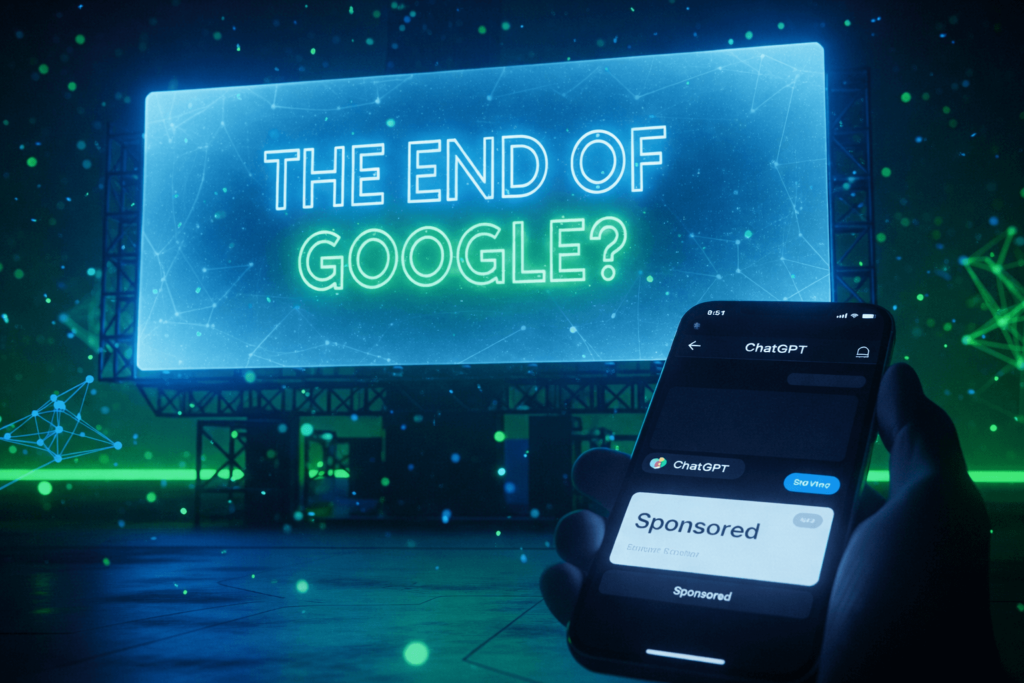
Let’s be honest: for the last decade, we’ve all been playing by Google’s rules. We bid on keywords, we optimized for the “10 blue links,” and we crossed our fingers that the algorithm didn’t wipe us out overnight.
But the game just changed.
OpenAI has officially pulled the curtain back on ChatGPT Ads.
If you’re a marketer, a business owner, or just someone who cares about how people find products online, you need to pay attention. This isn’t just “another ad placement.” It is a fundamental shift in how humans interact with brands.
As someone who has spent years growing blogs to 100K+ monthly visitors, I’ve seen trends come and go. But this? This is the “Google Ads in 2002” moment.
Here is your insider guide to understanding ChatGPT Ads and, more importantly, how to use them to crush your competition.
What Exactly Are ChatGPT Ads?
Forget everything you know about banner ads or those annoying “Suggested Posts” on social media.
ChatGPT Ads are contextual, conversational placements that appear within the chat interface. Instead of interrupting your scroll, these ads are designed to be the “next logical step” in a conversation.
How they look (The Anatomy of the Ad)
Based on current rollouts, ChatGPT ads generally appear at the bottom of the AI’s response.
They are clearly labeled as “Sponsored” or “Ad,” maintaining that thin line of trust OpenAI is famous for. If you ask ChatGPT for the “best running shoes for a marathon,” the AI gives you a detailed, objective answer. Below that answer, you might see a sponsored card for a pair of Brooks or Nikes that fits your exact criteria.
Who sees them?
Currently, OpenAI is testing these ads with:
- Free Tier Users: People using the standard free version.
- ChatGPT Go Users: The new, low-cost subscription tier.
- Logged-in Adults (18+): Primarily in the U.S. for the initial rollout.
If you’re a Plus, Pro, or Enterprise subscriber, you’re likely still in an ad-free bubble—for now.
Why ChatGPT Ads are a Nightmare for Google (and a Dream for You)
Google makes money when you don’t find what you’re looking for immediately. They want you to click, go back, click again, and browse.
ChatGPT is different. It wants to give you the answer instantly.
For advertisers, this is a goldmine for three reasons:
- Extreme Intent: On Google, a keyword like “best coffee machine” is a guess at what someone wants. In ChatGPT, the user has likely spent five minutes describing their kitchen size, budget, and preference for espresso. The “intent” is 10x deeper.
- Zero Competition (Initially): Right now, the interface is clean. You aren’t competing with 15 other ads and a map pack. It’s the AI’s answer, then you.
- Trust by Association: Users treat ChatGPT like a trusted advisor. When a product is suggested as a relevant follow-up to a helpful answer, it carries more weight than a random banner on a news site.
How to Prepare Your Brand (The “AEO” Strategy)
You can’t just log into an “OpenAI Ads Manager” and start spending thousands of dollars today (though that’s coming).
The real winners will be the brands that prepare for AEO — Answer Engine Optimization. If the AI doesn’t know who you are, it won’t recommend you, even if you have the budget.
1. Structure Your Data for Robots
ChatGPT doesn’t “browse” like a human; it digests. Make sure your website uses Schema Markup and has a clear FAQ section. Use bullet points and tables. The easier it is for GPTBot to summarize your product, the more likely you are to show up in a conversation.
2. Focus on “Problem-Solution” Content
Stop writing generic blog posts. Start writing content that answers specific, complex questions. Instead of “How to Save Money,” write “How a Freelancer in NYC Can Save $500/Month on Taxes.” This is the kind of specific data ChatGPT loves to cite.
3. Claim Your Entity
Make sure your brand is mentioned on authoritative sites like Wikipedia, Reddit, and industry-specific forums. ChatGPT builds its “trust” based on where else your brand is mentioned. If Reddit loves your product, ChatGPT probably will too.
The “Ethics” Question: Will Ads Ruin ChatGPT?
Sam Altman (OpenAI CEO) famously called ads a “last resort.”
To keep users from revolting, OpenAI has promised that ads will not influence the actual AI response. If you ask for the “healthiest cereal,” the AI won’t say “Cereal Brand X” just because they paid for an ad. The AI will give the objective truth, and the ad will sit separately. This separation of “State and Church” is what will keep the platform viable for the long term.
Action Plan: What Should You Do Today?
If I were starting a brand from scratch today with the goal of winning on ChatGPT, here is my 30-day plan:
- Week 1: Audit your technical SEO. Ensure your site is crawlable by GPTBot.
- Week 2: Identify the top 20 questions your customers ask. Create “Deep Answer” pages for each.
- Week 3: Sign up for every waitlist. Watch OpenAI’s blog like a hawk for the “Self-Serve Ad Manager” launch.
- Week 4: Monitor your “AI Share of Voice.” Use tools to see if ChatGPT mentions your brand when asked about your niche.
Final Thoughts
The era of “Search” is evolving into the era of “Answers.”
ChatGPT Ads represent the biggest shift in digital attention since the smartphone. You can either wait until everyone else is doing it and prices skyrocket, or you can start positioning your brand to be the “Answer” today.
The choice is yours. Are you ready for the conversation?
FAQ: Quick Hits
- Are ChatGPT ads live?
Yes, in limited testing for Free/Go users in the US. - Can I buy them now?
Not quite yet. It’s currently in a controlled beta with select partners. - Will they be on mobile?
Yes, both the web and the app are part of the rollout.