
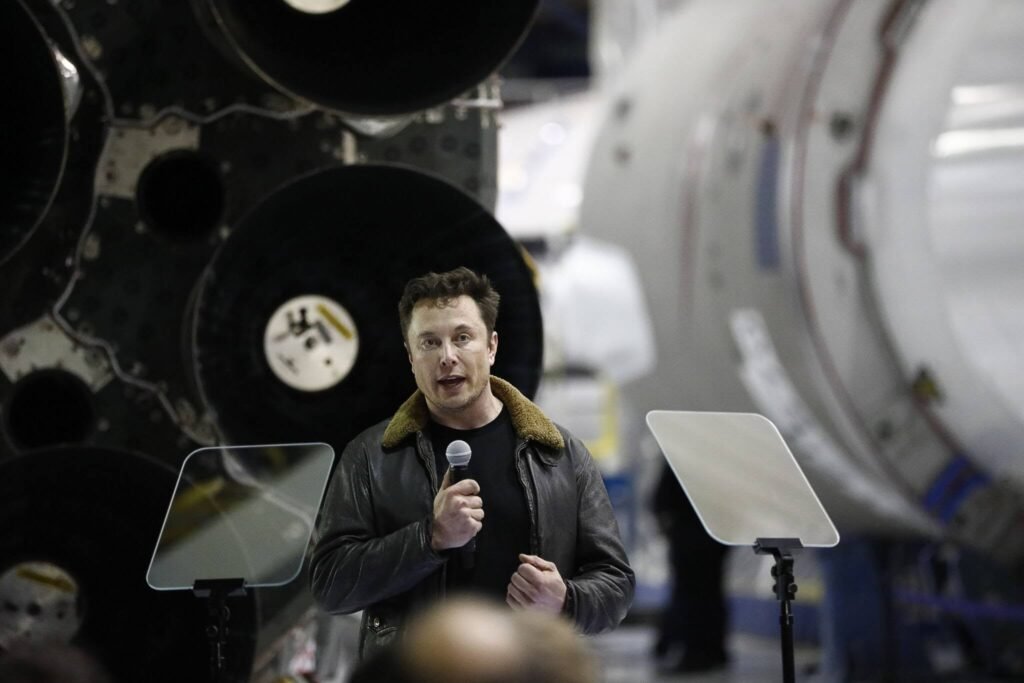
The word “trillionaire” sounds like something pulled straight out of a science fiction novel, usually reserved for comic book supervillains or galactic emperors.
But as of June 12, 2026, it is a reality.
Following a record-breaking Initial Public Offering (IPO) by SpaceX, Elon Musk officially crossed the 13-figure mark. Let that sink in. His net worth is now higher than the annual economic output of most countries on Earth.
If you’ve been following the markets, you know the buildup to this moment has been intense. But the sheer scale of the numbers and what this means for the future of tech, retail investing, and space exploration is something we need to break down.
The $75 Billion Rocket Ride: Breaking Down the SpaceX IPO
SpaceX has been the crown jewel of private tech companies for over two decades. Investors have been salivating for a chance to get a piece of the action. When they finally opened the doors, the floodgates broke.
Here is what the historic listing (trading under the ticker SPCX on the Nasdaq) looked like on day one:
- The Price: Shares were initially priced at $135.
- The Raise: The company raised a staggering $75 billion, shattering the previous IPO record set by Saudi Aramco in 2019.
- The Pop: Shares surged by nearly 20% on the first day, closing at $160.95.
- The Valuation: SpaceX ended its first day of trading valued at $2.1 trillion.
This massive jump is what pushed Musk’s personal fortune up by more than $60 billion in a single day, cementing his status at around $1.1 trillion. He now has more wealth than the next several billionaires combined.
How Did We Get Here? A $50k House to a $1.1 Trillion Net Worth
It’s hard to wrap your head around $1.1 trillion. To put it in perspective, one trillion dollars is enough to buy roughly 243 billion gallons of gasoline.
Yet, there is a fascinating irony in Musk’s newfound status. The world’s richest man is famously “house poor” by choice. While companies linked to him own sprawling mansions, Musk’s primary residence is a tiny, 400-square-foot prefab home near the SpaceX Starbase facility in Boca Chica, Texas. Built by a startup called Boxabl, the house costs around $50,000.
His mother, Maye Musk, recently noted that when she visits, she sleeps in the garage, and “there is no food in the fridge.”
Musk’s wealth isn’t sitting in checking accounts; it is entirely locked up in the aggressive, boundary-pushing companies he controls primarily his massive stakes in Tesla and, now, the publicly traded SpaceX.
What Does SpaceX Actually Do with a $2.1 Trillion Valuation?
You might assume a company worth over $2 trillion is swimming in cash. You’d be wrong.
SpaceX’s prospectus revealed that while the company brought in an impressive $18.7 billion in revenue in 2025, it actually posted a net loss of $4.9 billion.
So why are investors throwing billions of dollars at a company that is currently losing money? Analysts call it the “Elon Premium.” Investors aren’t buying the current balance sheet; they are betting on Musk’s ability to turn wild, ambitious ideas into foundational industries.
SpaceX is no longer just a rocket launch provider. The capital from this IPO is earmarked for massive infrastructure shifts:
- AI Data Centers in Space: Overcoming Earth’s energy limitations by moving heavy computational infrastructure into orbit.
- Starlink Dominance: Expanding their low-Earth orbit satellite internet constellation to blanket the globe.
- The Mars Colony: Funding the mind-bogglingly expensive goal of making humanity a multi-planetary species.
Key insight: Most of SpaceX’s recent valuation surge isn’t about traditional spaceflight it’s driven by their pivot into the AI infrastructure boom and the continued growth of the Starlink network.
Why You Should Care (Beyond the Mind-Boggling Numbers)
You might be thinking, “Great for Elon, but what does this have to do with me?”
Actually, quite a bit.
Before this IPO, SpaceX was entirely private. Its growth benefited a select group of insiders, venture capitalists, and sovereign wealth funds. Now that it is publicly traded and fast-tracked for entry into major indexes like the Nasdaq 100 and Russell 1000, everyday retail investors are tied to its success.
If you have a 401(k) or own a broad market index fund, there is a very good chance you now own a tiny sliver of SpaceX. Your retirement is now tangentially linked to whether or not Elon Musk can successfully build AI data centers in orbit or land humans on Mars.
As a publicly traded company, SpaceX will face quarterly earnings pressure and public scrutiny it has never dealt with before. The ride to a trillion dollars was historic, but keeping the public market happy while trying to colonize another planet? That might be Musk’s hardest engineering challenge yet.